Home › Services › Fiber-Cement and James Hardie Siding
Fiber cement is the usual replacement for failed hardboard on Cypress houses. It does not swell, it does not burn, and it holds paint. It is also heavy, dusty to cut and unforgiving of poor flashing.
Fiber-cement siding is made of cement, sand and cellulose fiber, pressed into planks and panels that look like painted wood lap siding. James Hardie is the best-known maker, and its name is often used for the whole category, the way people say “Sheetrock” for drywall. Other makers produce fiber cement too.
James Hardie sells products formulated for different climates and designates the hot, humid Gulf Coast as its HZ10 zone. If a Cypress quote names Hardie, it is reasonable to ask which product and finish is being specified.
Planks come primed, for painting after installation, or with a factory-applied color finish. Factory finish usually carries a separate finish warranty; site painting gives more color freedom, which may matter for the ACC. Either way, cut ends should be sealed or primed.
Most fiber-cement problems are installation problems. The details that matter:
Because no county inspector will look behind the planks, ask for photos of the wall once the old siding is off and the wrap and flashing are in. A contractor who follows the maker’s installation guide can also tell you what the product warranty requires.
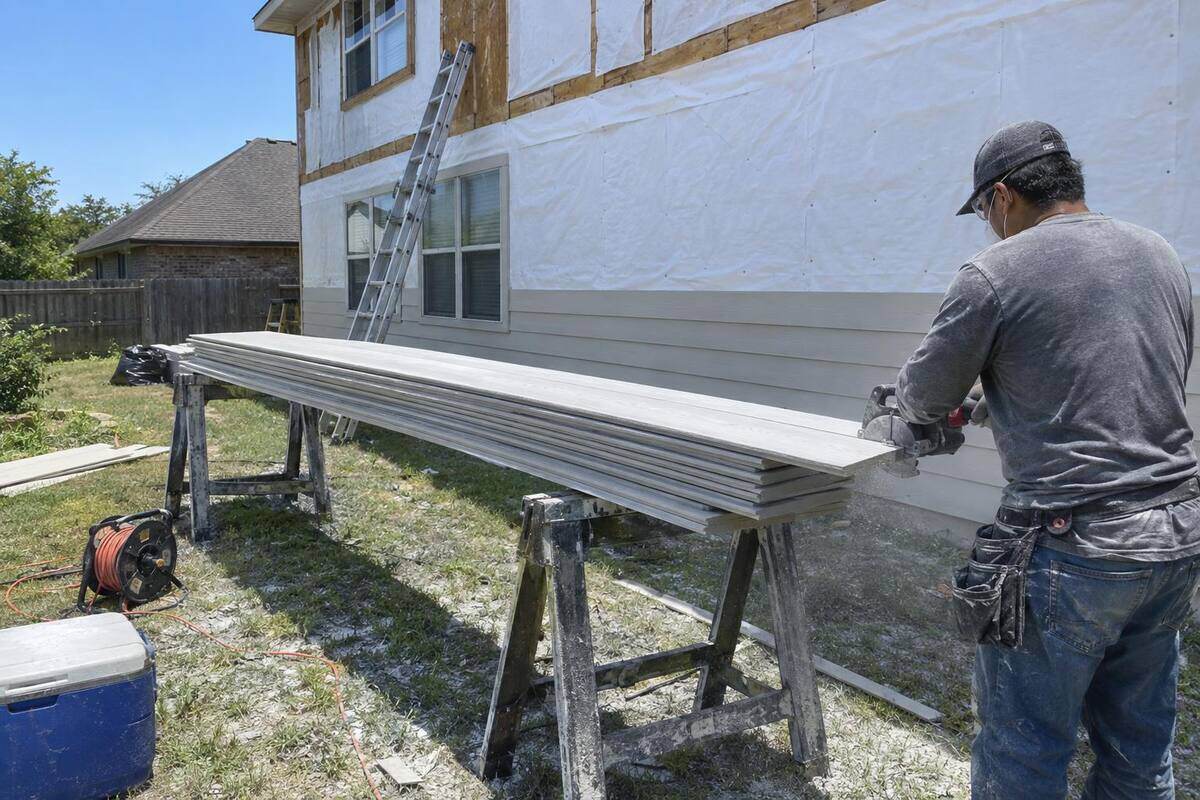
Cutting fiber cement releases crystalline silica dust. Crews should cut outside with shears or dust-collecting saws and keep the dust away from windows, pools and neighbors’ yards.
Ask the contractor you are connected with to write the trim and flashing details into the quote, not just the square footage.
 Cypress Roofing